| ACCREDITATION |
|
|
About the Journal
Focus and Scope
Journal of Economics, Entreprenurship, Management Business and Accounting (JEEMBA) is a nationally recognized electronic journal that serves as a platform for disseminating high-quality scholarly work. It encompasses original research articles, comprehensive review articles, and short communications in the following interconnected disciplines:
1. Accounting and Auditing
- Financial Accounting
- Management Accounting
- Public Sector Accounting
- Auditing
- Taxation
- Accounting Information Systems
2. Management and Organizational Studies
- Human Resource Management
- Marketing Management
- Strategic Management
- Operations Management
- Organizational Behavior
- Green Management (Sustainable Business Practices)
- Sharia Management (Islamic Business Practices)
- Tourism Management
3. Economics and Economic Development
- Development Economics
- Resource Economics
- Agricultural Economics
- Economic Behavior
- Public Policy
4. Finance and Corporate Governance
- Financial Management
- Capital Markets
- Corporate Governance
5. Entrepreneurship and Innovation
- Entrepreneurship
- Management Education (with a focus on entrepreneurial and business education)
Publication Frequency
JEEMBA is published 4 times a year, namely every January, April, July, October.
Publication Ethics
Journal of Economics, Entrepreneurship, Management Business and Accounting (JEEMBA) is published by Sakura Digital Nusantara which was first published in January 2023, taking part in the fields of economics, entrepreneurship, management and accounting, especially in the fields of capital market management accounting, business law, taxation, information systems and other economic and financial fields. JEEMBA is published twice a year, every January and July. Articles published in JEEMBA can be in the form of research articles or conceptual articles (non-research).
This statement of scientific code of ethics is a statement of the code of ethics of all parties involved in the publication process of the scientific journal JEEMBA, namely managers, section editors, reviewers and authors. The core of the code of ethics for scientific publications includes three ethical values in publication, namely:
- Neutrality, which is free from conflicts of interest in the management of publications.management of the publication
- Fairness, i.e. giving authorship rights to those who are entitled as authors
- Honesty, i.e. free from plagiarism in publications.
Publisher Responsibility
- The publisher of JEEMBA Journal is responsible for publishing manuscripts after going through the editing, reviewing, and layout process in accordance with the rules for publishing Scientific Journals.
- The publisher of JEEMBA Journal is responsible for ensuring academic freedom for editors and independent reviewers in carrying out their respective duties.
- The publisher of JEEMBA Journal is responsible for maintaining privacy and editorial freedom.
Editor Responsibility
- The editors of the JEEMBA Journal are responsible for deciding which manuscripts are eligible for publication through an editorial board meeting, referring to the journal’s editorial policies. In addition, editors are responsible for detecting plagiarism.
- In the process of reviewing and accepting manuscripts, the editorial team upholds fairness in decision-making and does not discriminate based on race, gender, religion, ethnicity, nationality, or political ideology of the authors.
- The editorial board and editorial team will not disclose to authors the identities of reviewers, and reviewers will not be informed of the authors’ identities (blind review).
- Unpublished manuscripts will not be used by editors for their own interests and will be returned directly to the authors.
Reviewer Responsibility
- Reviewers assist section editors in making editorial decisions on submitted articles.
- Reviewers are responsible for the recommendations of the articles they review.
- Article reviews are conducted in a blind review and are objective and supported by clear arguments.
- Reviewers are responsible for citations, references to the articles they review.
- Reviewers must always maintain the confidentiality of information and not use information from the articles they review for their own interests,
Section Editor Responsibility
- The section editor is responsible for citations, references, for the article he/she is reviewing after suggestions or feedback from the reviewer.
- The section editor is responsible for correcting whether what is suggested by the reviewer has been done.
- The section editor is responsible for correcting the article whether it complies with the policies of the JEEMBA journal.
Author Responsibility
- The author presents research articles or thoughts clearly, honestly, and without plagiarism.
- The author must indicate the reference of the opinions and works of others quoted.
- Authors are responsible for confirmation of the article they have written.
- Authors must write articles ethically, honestly, and responsibly, in accordance with applicable scientific writing regulations.
- The author does not mind if the article undergoes editing without changing the substance.
Open Access Policy

This journal provides immediate open access to its content under the principle that making research freely available to the public supports a greater global exchange of knowledge.
Benefits of open access for authors include:
- Free access for all users worldwide
- Authors retain copyright to their work
- Increased visibility and readership
- Rapid publication
- No spatial constraints
Articles published in this journal are licensed under a Creative Commons Attribution-ShareAlike 4.0 International License .
Peer Review Process
Every manuscript submitted to the editorial board will undergo an initial selection process through an Initial Review by the Editorial Board. The manuscript will then be sent to Peer Reviewers and proceed to the next stage of selection through a Double-Blind Peer Review Process. Subsequently, the manuscript will be returned to the author for revision. This process takes a maximum of one month. For each manuscript, peer reviewers will evaluate both substantive and technical aspects.
The peer reviewers collaborating with JEEMBA are experts in the fields of economics, entrepreneurship, management, business, and accounting. They have extensive experience in managing and publishing prestigious journals, both domestically and internationally. All submitted manuscripts are reviewed by the editorial staff. Manuscripts evaluated by the editor as not meeting the journal’s criteria will be rejected immediately without external review. Manuscripts deemed potentially interesting to our readers are sent for double-blind peer review.
The editor then makes a decision based on the reviewers’ recommendations, which may include: rejection, revision required, or acceptance. The editor has the authority to decide which manuscripts submitted to the journal shall be published.
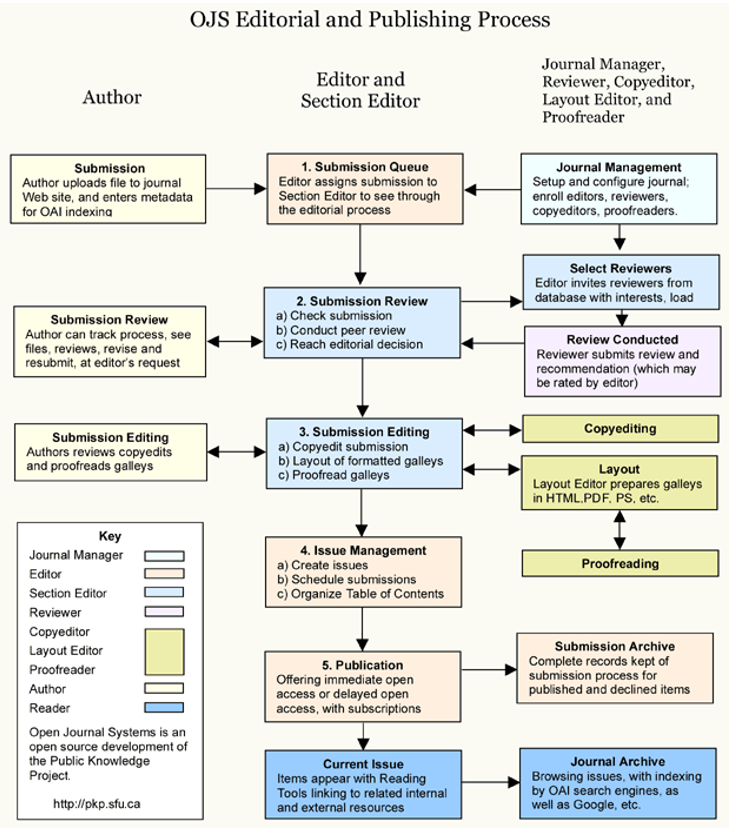
Review Process:
- Author submits manuscript
- Editor’s evaluation (some manuscripts are rejected or returned prior to the review process)
- Double-blind peer review
- Editor’s decision
- Confirmation to the author
This journal uses Open Journal Systems 3.3.0.13, an open-source journal management and publishing software developed, supported, and freely distributed by the Public Knowledge Project under the GNU General Public License.